
Norman Foster: The Architect Who Helped Shape Modern Cities
Norman Foster is one of the most influential architects of the late 20th and early 21st centuries. Known for elegant forms, advanced engineering, and ambitious use of glass and steel, he has designed buildings and infrastructure around the world. His work ranges from offices and airports to museums, bridges, and major urban projects.
Early Life and Career
Foster was born in Manchester, England, in 19
After studying architecture at the University of Manchester, he received a Henry Fellowship to attend Yale University in the United States. At Yale, he earned a master’s degree in architecture and met architect Richard Rogers, with whom he later worked.
In 1963, Foster helped establish Team 4, an architectural practice that included Rogers, Su Brumwell, and Wendy Cheesman. He founded Foster Associates in 19
The firm later became Foster + Partners, an international practice known for projects that bring architecture, engineering, and urban planning together.
Design Approach
Foster’s work is often associated with high-tech architecture, a style that highlights a building’s structure and systems rather than hiding them. His designs frequently use lightweight materials, clear structural forms, and expansive glass. Yet his approach is not limited to a single look: each project is shaped by its setting, purpose, and technical challenges.
Environmental performance has also become a prominent part of Foster + Partners’ work. The firm has explored natural lighting, energy efficiency, public transportation, and ways to make large buildings more comfortable and resource-conscious. Foster’s projects often treat sustainability as a design challenge that should be addressed from the earliest stages.
Notable Projects
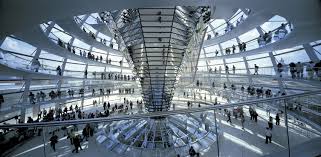
Among Foster’s best-known buildings is the Reichstag dome in Berlin, completed in 1999 as part of the renovation of Germany’s parliament building. Its glass dome gives visitors a view over the city and allows daylight to enter the parliamentary chamber below.
In London, Foster + Partners designed the Millennium Bridge, a pedestrian bridge across the River Thames, and 30 St Mary Axe, widely known as “The Gherkin.” The latter’s curved profile and patterned glass exterior made it one of the city’s most recognizable modern buildings.
Other significant projects include the Hearst Tower in New York, which combines a contemporary steel-and-glass addition with an earlier stone base; the Great Court at the British Museum in London; and the redesign of Hong Kong International Airport. Foster + Partners has also designed Apple Park in California, the headquarters campus developed for Apple.
Recognition and Influence
Foster received the Pritzker Architecture Prize in 19
He was knighted in 1990 and later became a life peer, taking the title Lord Foster of Thames Bank. His work has earned international recognition for its technical ambition and its influence on contemporary architecture.
Beyond individual buildings, Foster’s career has helped expand the role of the architect in large-scale projects. His practice often coordinates architecture with engineering, transportation, landscape, and city planning. This broad approach reflects a central idea in his work: buildings are not isolated objects but part of the places and systems people use every day.
A Lasting Legacy
Norman Foster’s architecture is recognized for its clarity, precision, and willingness to embrace new technology. From a parliamentary dome to an airport or a city landmark, his projects show how engineering and design can work together to transform familiar spaces. His influence can be seen in the continuing effort to create buildings that are visually distinctive, practical, and responsive to their surroundings.
Exploring the Legacy of Norman Foster: 9 Frequently Asked Questions About the Renowned Architect
- Who is Norman Foster, the architect?
- What is Norman Foster best known for?
- What architectural style is Norman Foster associated with?
- What are Norman Foster’s most famous buildings?
- What is Foster + Partners, and did Norman Foster found it?
- Did Norman Foster design the Reichstag dome in Berlin?
- What awards has Norman Foster received?
- How has Norman Foster influenced modern architecture?
- What is Norman Foster’s approach to sustainable architecture?
Who is Norman Foster, the architect?
Norman Foster is a British architect known for combining innovative engineering with clean, modern design. He founded Foster + Partners, the international architecture firm behind projects such as London’s 30 St Mary Axe, the Reichstag dome in Berlin, and the Hearst Tower in New York. Awarded the Pritzker Architecture Prize in 1999, Foster has influenced cities around the world through landmark buildings, transportation projects, and sustainable design.
What is Norman Foster best known for?
Norman Foster is best known for high-tech architecture that combines sleek, modern designs with advanced engineering and an emphasis on efficiency. Through his firm, Foster + Partners, he has designed internationally recognized projects such as London’s 30 St Mary Axe, known as “The Gherkin,” the glass dome atop Berlin’s Reichstag, and Hong Kong International Airport.
What architectural style is Norman Foster associated with?
Norman Foster is most closely associated with high-tech architecture, a style that makes a building’s structure, engineering, and technology part of its visual design. His work often features steel, glass, open interiors, and clearly expressed structural elements. Foster’s buildings also reflect modernist principles and, increasingly, a focus on energy efficiency and environmental sustainability.
What are Norman Foster’s most famous buildings?
Norman Foster’s most famous designs include 30 St Mary Axe, known as “The Gherkin,” and the Millennium Bridge in London; the Reichstag dome in Berlin; the Hearst Tower in New York City; and Hong Kong International Airport. His practice, Foster + Partners, also designed Apple Park in California and worked with engineer Michel Virlogeux on the Millau Viaduct in France. These projects showcase Foster’s signature blend of elegant forms, innovative engineering, and attention to how people use buildings and public spaces.
What is Foster + Partners, and did Norman Foster found it?
Foster + Partners is an international architecture, engineering, and design firm known for projects ranging from buildings and airports to infrastructure and urban planning. Norman Foster founded the practice in 1967 as Foster Associates; it later became Foster + Partners as the firm grew into a broader partnership.
Did Norman Foster design the Reichstag dome in Berlin?
Yes. Norman Foster and his firm, Foster + Partners, designed the glass dome as part of the renovation of the Reichstag building in Berlin, Germany. Completed in 1999, the dome features a spiraling ramp that lets visitors look out over the city and down into the parliamentary chamber, symbolizing transparency in government.
What awards has Norman Foster received?
Norman Foster has received many of architecture’s highest honors, including the Royal Gold Medal from the Royal Institute of British Architects in 1983, the American Institute of Architects Gold Medal in 1994, and the Pritzker Architecture Prize in 1999. He was also awarded Japan’s Praemium Imperiale for Architecture in 2002 and Spain’s Prince of Asturias Award for the Arts in 2009, recognizing his lasting influence on architecture and design.
How has Norman Foster influenced modern architecture?
Norman Foster has influenced modern architecture by showing how advanced engineering, innovative materials, and elegant design can work together. A leading figure in high-tech architecture, he often makes a building’s structure and systems visible while using glass, steel, and natural light to create open, efficient spaces. Projects such as the Reichstag dome in Berlin and 30 St Mary Axe in London helped popularize bold, technology-driven designs, while his firm’s work has also emphasized energy efficiency and the relationship between buildings, transportation, and public spaces.
What is Norman Foster’s approach to sustainable architecture?
Norman Foster’s approach to sustainable architecture combines environmental performance with practical, thoughtful design. His projects often use daylight, natural ventilation, efficient building systems, and carefully selected materials to reduce energy use and improve comfort. Foster also considers a building’s wider setting, including public transportation, urban planning, and how people will use the space over time. Rather than treating sustainability as an add-on, his practice aims to integrate it into a project from the earliest design stages.