
Picasso Art: A Guide to the Artist’s Life, Styles, and Most Famous Works
Pablo Picasso was one of the most influential artists of the 20th century. Born in Spain in 1881, he spent much of his adult life in France and worked across painting, sculpture, printmaking, drawing, ceramics, and collage. His art changed dramatically over the decades, making his career a fascinating journey through experimentation and reinvention.
What Makes Picasso’s Art Distinctive?
Picasso is often associated with bold shapes, unusual perspectives, and a willingness to challenge traditional ways of representing the world. Rather than showing a subject from a single viewpoint, he might depict several angles at once. Faces, figures, and objects could be simplified, rearranged, or broken into geometric forms.
His work is not defined by one look or technique. Picasso moved between realistic studies, expressive paintings, playful images, and radical experiments. Understanding the periods of his career offers a useful starting point for exploring his art.
Major Periods in Picasso’s Art
The Blue Period
From about 1901 to 1904, Picasso often used cool blue and blue-green tones. Many paintings from this period focus on poverty, loneliness, and hardship. The figures are frequently isolated, with elongated forms and subdued expressions. The Old Guitarist is among the best-known works associated with the Blue Period.
The Rose Period
In the years around 1904 to 1906, warmer pink, red, and orange tones became more common. Picasso painted performers and circus figures, including acrobats and harlequins. These works can feel lighter in color than the Blue Period paintings, though they often retain a reflective, sometimes melancholy mood.
African and Iberian Influences
In the early 1900s, Picasso encountered African sculptures and Iberian art that influenced his approach to form and the human face. These influences helped inspire the simplified shapes and striking masks seen in some of his work. This period is important to the story of modern art, but it also raises questions about how European artists borrowed from cultures under colonial rule. Looking at Picasso’s work today includes considering both its innovation and the historical context behind those influences.
Cubism
Picasso and French artist Georges Braque developed Cubism in the early 20th century. Cubist artists broke subjects into geometric shapes and showed multiple viewpoints within a single composition. The result was not a straightforward window onto reality; it was a new way to picture how people perceive and remember objects.
Les Demoiselles d’Avignon (1907) is often seen as a pivotal work in Picasso’s shift toward more radical forms. Later, in paintings such as Girl with a Mandolin, forms become more fragmented and tightly organized. Picasso also helped expand collage as an artistic technique, incorporating materials such as paper into compositions.
Later Work
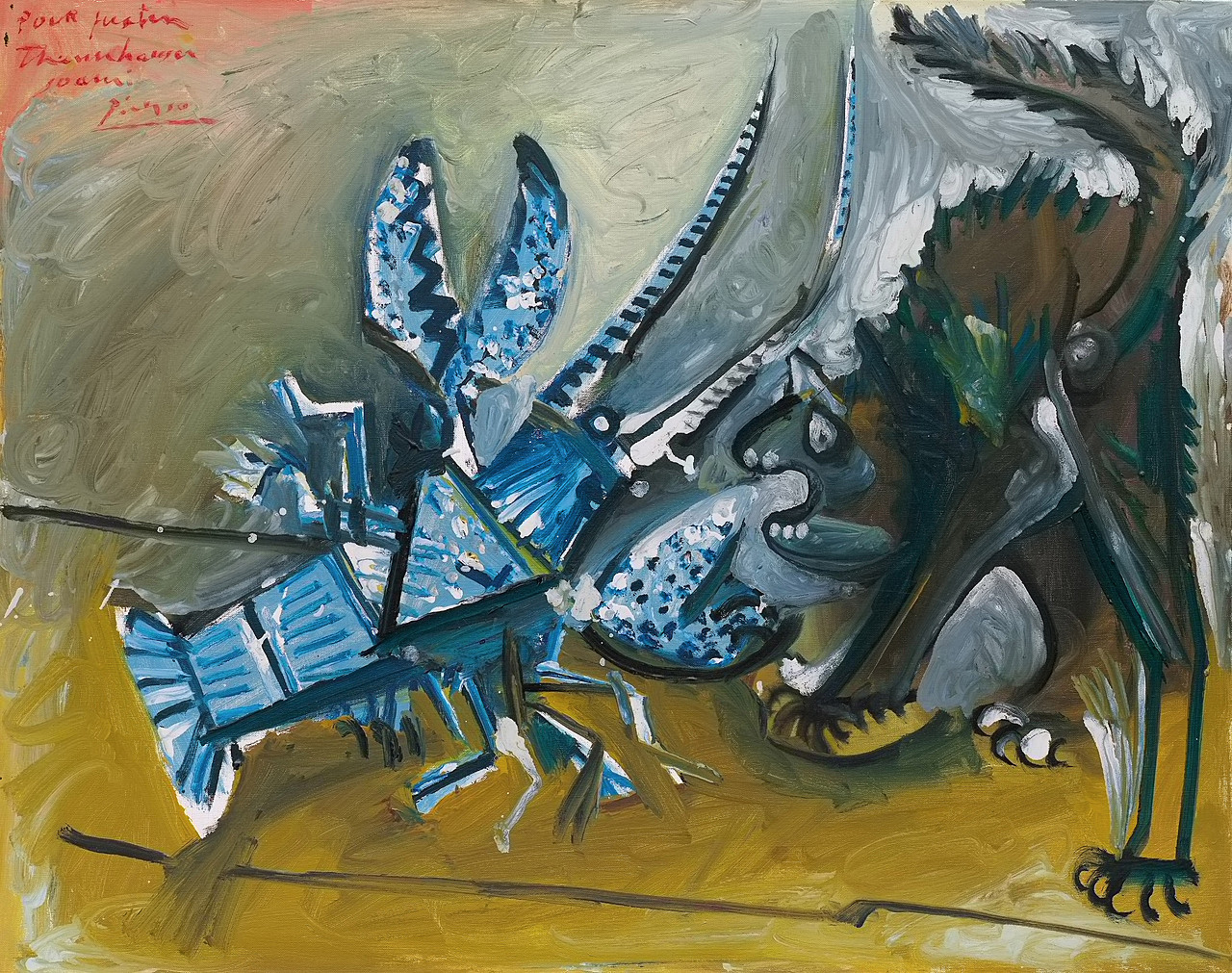
Picasso continued to experiment throughout his long career. He made sculptures, prints, ceramics, and paintings that revisited earlier styles while adding new ideas. His later work can be energetic, humorous, direct, and sometimes deliberately rough in appearance. Rather than settling on a single signature style, he repeatedly reworked familiar subjects and techniques.
Important Picasso Works
- Les Demoiselles d’Avignon (1907): A landmark painting that challenged conventional ideas of perspective and the human figure.
- Girl with a Mandolin (1910): A notable example of Analytic Cubism, in which the figure and instrument are broken into faceted forms.
- Three Musicians (1921): A bright, carefully arranged composition often linked to Synthetic Cubism.
- Guernica (1937): A monumental antiwar painting inspired by the bombing of the Spanish town of Guernica during the Spanish Civil War.
- The Weeping Woman (1937): A powerful portrait connected to Picasso’s response to the violence and grief of the period surrounding Guernica.
Why Is Guernica So Important?
Guernica is one of Picasso’s most recognized paintings. Its large scale, stark palette, and anguished figures convey the devastation of war. The work does not present a simple documentary scene; instead, it uses symbolic and distorted imagery to communicate suffering and fear. Over time, it has become an international emblem of the human cost of conflict.
Picasso’s Influence on Modern Art
Picasso helped change what audiences expected art to do. His work encouraged artists to question realistic representation, experiment with materials, and treat a subject from multiple perspectives. His influence can be seen across modern and contemporary art, including painting, sculpture, design, and collage.
His legacy is also complex. Picasso’s personal life and relationships have received increased attention, and some viewers reassess the way women are depicted in his work. Exploring these questions adds context to his achievements and helps make conversations about his art more complete.
How to Look at Picasso’s Art
When viewing a Picasso work, begin with what is visible: its shapes, colors, materials, and composition. Notice whether the subject appears realistic or fragmented, and consider how the artist directs attention across the image. It can also help to learn when the work was made and what was happening in Picasso’s life or the wider world at the time.
Picasso’s art rewards close looking because it does not offer just one way to see. Across a career that spanned more than seven decades, he continually tested the limits of representation—and helped reshape the possibilities of modern art.
7 Frequently Asked Questions About Picasso’s Art
- Did Picasso paint the Mona Lisa?
- What is Picasso’s art style called?
- Why is Picasso so famous?
- What is Pablo Picasso’s most famous piece?
- What are 10 facts about Picasso?
- Why is Pablo Picasso’s art so special?
- What was Picasso’s most expensive painting?
Did Picasso paint the Mona Lisa?
No, Pablo Picasso did not paint the Mona Lisa. The famous portrait was painted by Leonardo da Vinci in the early 16th century. Picasso was questioned in connection with the 1911 theft of the painting from the Louvre, but he was not its creator and was later cleared of involvement in the theft. Picasso did make artworks inspired by or referencing the Mona Lisa, but the original remains Leonardo’s work.
What is Picasso’s art style called?
Picasso’s art does not have just one style; he experimented with several throughout his career. He is best known for co-founding Cubism, an approach that breaks subjects into geometric forms and shows multiple viewpoints at once. His work also includes periods often called the Blue Period and Rose Period, as well as Neoclassical and Surrealist influences.
Why is Picasso so famous?
Picasso is famous for transforming modern art through his bold experimentation and remarkable range. He helped develop Cubism, a revolutionary style that broke subjects into geometric shapes and showed multiple viewpoints at once, and he continued to reinvent his work across painting, sculpture, printmaking, ceramics, and collage. Works such as Guernica also made a powerful impact through their response to war and human suffering. His long, prolific career and lasting influence on artists around the world have made him one of the best-known artists of the 20th century.
What is Pablo Picasso’s most famous piece?
Pablo Picasso’s most famous work is widely considered to be Guernica (1937), a monumental painting depicting the suffering caused by the bombing of the Spanish town of Guernica during the Spanish Civil War. Its stark black, white, and gray palette and anguished figures make it a powerful antiwar statement. Although other works, such as Les Demoiselles d’Avignon, are also highly influential, Guernica is often the painting most recognized by the public.
What are 10 facts about Picasso?
Ten interesting facts about Picasso are that he was born in Málaga, Spain, in 1881; his father, José Ruiz Blasco, was a painter and art teacher; his family moved to Barcelona when he was a teenager; he enrolled at Madrid’s Royal Academy of San Fernando in 1897; his early 1900s Blue Period featured many blue-toned, somber paintings; it was followed by the warmer-colored Rose Period; he helped develop Cubism with artist Georges Braque; he painted Guernica in 1937 in response to the bombing of the Spanish town; he also created sculpture, ceramics, prints, and collages; and he died in France in 1973 at age 91.
Why is Pablo Picasso’s art so special?
Pablo Picasso’s art is special because he continually challenged traditional ways of seeing and representing the world. A co-founder of Cubism, he portrayed subjects through fragmented shapes and multiple viewpoints, while moving freely among styles, materials, and moods throughout his long career. From the melancholy Blue Period to the powerful antiwar imagery of Guernica, his work combined bold experimentation with emotional impact and helped reshape modern art.
What was Picasso’s most expensive painting?
Picasso’s most expensive painting sold at auction is Les Femmes d’Alger (Version O) (1955). It sold at Christie’s in New York in 2015 for $179.4 million, including buyer’s premium, setting an auction record for a Picasso work.