
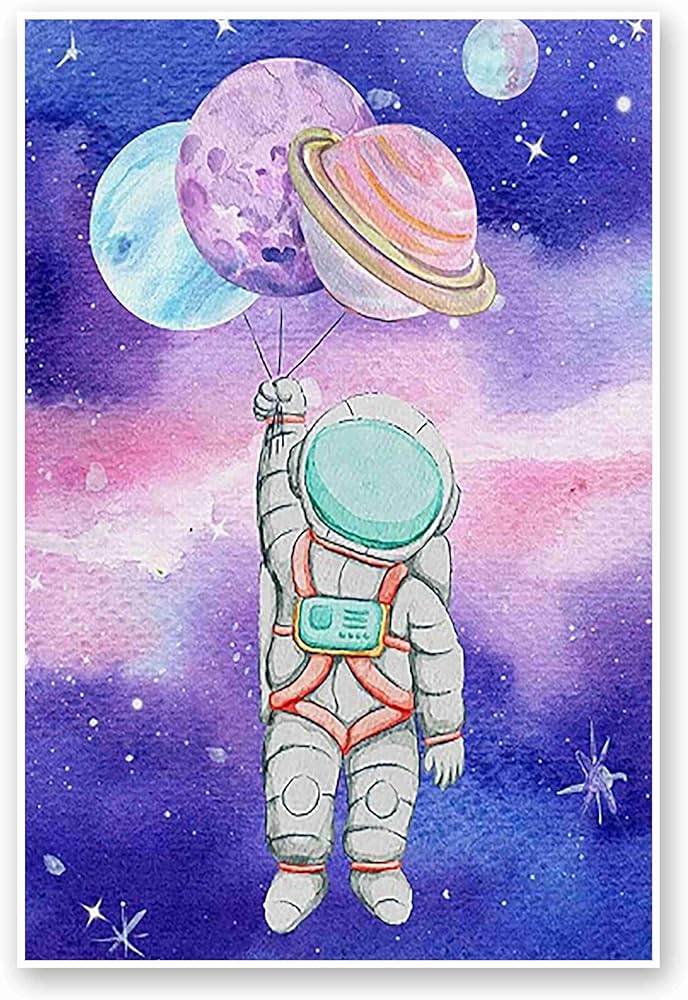
Space Painting: Bringing the Universe to the Canvas
Space painting turns the vastness of the universe into a subject for art. From glowing nebulae and distant galaxies to planets, moons, and imagined cosmic landscapes, these paintings invite viewers to explore scenes far beyond everyday experience. Artists can use realistic astronomical references or let imagination lead the way.
What Is Space Painting?
Space painting is a broad term for artwork inspired by outer space. It can include scientifically informed depictions of celestial objects, abstract compositions built from cosmic colors and shapes, or scenes from science fiction. Some artists aim for astronomical accuracy, while others focus on mood, scale, and wonder.
The subject offers endless possibilities. A painting might show a familiar planet against a field of stars, a colorful cloud of interstellar gas, or a fictional world beneath unfamiliar suns. Even a simple arrangement of dark color, scattered stars, and one bright point of light can suggest the immensity of space.
Color, Light, and Depth
Color plays a major role in space art. Deep blues, purples, and blacks can create a sense of distance, while bright pinks, reds, and golds can make a nebula appear to glow. Artists often place the brightest colors near a focal point and gradually soften or darken the surrounding areas.
Light helps establish depth. A luminous planet or star can stand out against a darker background, and subtle gradients can make a spherical planet feel three-dimensional. Layers of color, transparent glazes, or soft blending can suggest dust, gas, and distant light. A few carefully placed highlights may communicate more than many small details.
Creating a Space Painting
There is no single method for painting a cosmic scene. Acrylics, watercolors, oils, gouache, and digital tools can all produce compelling results. A basic process might include these steps:
- Choose a focal point. Decide whether the main subject will be a planet, a bright star, a nebula, or an imagined spacecraft.
- Plan the composition. Arrange the large shapes before adding details. Consider leaving areas of darkness so the brightest features have room to stand out.
- Build the background. Add broad areas of dark color, then layer in gradients or clouds of color to suggest depth.
- Add celestial forms. Paint planets, moons, or other large objects, paying attention to their light and shadow.
- Create stars and highlights. Vary the size and brightness of stars rather than placing them evenly across the canvas. A few brighter points can guide the viewer’s eye.
- Refine the atmosphere. Add soft edges, glowing areas, or small details where they support the composition.
Experimentation is part of the process. Artists may use sponges, dry brushes, splatters, or layered washes to create texture. These methods can be effective, but restraint matters: too many effects can make the image feel busy and obscure its main subject.
Art and Astronomy
Space painting can connect artistic expression with scientific curiosity. Photographs and observations of planets, stars, and galaxies offer references for artists interested in real astronomical forms. At the same time, painting is not limited to what can be observed directly. It can communicate the emotional impact of looking into the night sky or imagine places that remain beyond human reach.
When accuracy is important, artists can research the appearance and scale of the objects they depict. When imagination is the goal, they can use those references as a starting point and then invent their own cosmic worlds. Both approaches can help viewers see the universe in a fresh way.
Why Space Painting Captivates Us
The universe combines beauty with mystery. Its enormous scale can make human concerns feel small, yet images of stars and planets can also inspire a sense of connection and possibility. Space painting gives artists a way to explore those feelings through color, shape, and light.
Whether carefully researched or entirely imagined, a space painting can be an invitation to pause and look outward. With a dark background, a few luminous forms, and a clear focal point, an artist can transform a blank surface into a window onto the cosmos.
9 Reasons Why Space Painting is a Stellar Artistic Endeavor
- Encourages creativity and imagination.
- Makes a striking visual statement.
- Explores the beauty of the cosmos.
- Offers endless color possibilities.
- Works with many art mediums.
- Can be realistic or abstract.
- Helps develop blending skills.
- Inspires curiosity about astronomy.
- Creates a sense of wonder.
Challenges in Space Painting: Realism, Color Balance, and Time-Consuming Details
- Space scenes can be difficult to make look realistic.
- Dark colors may dominate the composition.
- Fine details can take a long time to paint.
Encourages creativity and imagination.
Space painting encourages creativity and imagination by inviting artists to picture worlds beyond everyday experience. With no fixed rules for how an alien planet, distant galaxy, or glowing nebula should look, artists can experiment with bold colors, unusual shapes, and fantastical landscapes. This freedom helps them develop original ideas and turn curiosity about the universe into a unique visual story.
Makes a striking visual statement.
Space painting makes a striking visual statement through its bold colors, dramatic contrasts, and expansive cosmic imagery. Glowing nebulae, brilliant stars, and mysterious planets can instantly draw attention and become a memorable focal point in a room, gallery, or collection. Whether realistic or imaginative, a space painting brings a sense of wonder and scale to its surroundings.
Explores the beauty of the cosmos.
Space painting explores the beauty of the cosmos by bringing distant stars, colorful nebulae, and mysterious planets to life on canvas. Through glowing colors, dramatic contrasts, and imaginative details, artists can capture the wonder of the universe and invite viewers to see its vastness in a new way.
Offers endless color possibilities.
One of the great advantages of space painting is its endless color possibilities. Artists can blend deep blues, purples, and blacks with vivid pinks, fiery oranges, or glowing greens to portray nebulae, distant galaxies, and imagined planets. Because cosmic scenes are not limited to familiar landscapes, painters can experiment freely with unusual palettes, dramatic contrasts, and luminous effects, making each artwork feel uniquely expressive.
Works with many art mediums.
Space painting works well across many art mediums, giving artists plenty of ways to bring cosmic scenes to life. Acrylics can create bold colors and layered effects, watercolors lend themselves to soft nebulae and glowing washes, and oils allow for rich blending and subtle transitions. Artists can also use pastels, ink, collage, or digital tools to depict stars, planets, and distant galaxies. This flexibility makes space painting approachable for beginners and inspiring for experienced artists, who can choose the medium that best suits their style and vision.
Can be realistic or abstract.
One of the great advantages of space painting is its flexibility: it can be realistic or abstract. Artists can carefully depict planets, stars, and nebulae using astronomical references, or use bold colors, shapes, and textures to capture the feeling of the cosmos without aiming for accuracy. This freedom lets beginners experiment and gives experienced artists room to develop a distinctive style.
Helps develop blending skills.
Space painting helps develop blending skills because it often uses gradual transitions between dark backgrounds, glowing nebulae, and bright stars or planets. By layering and softening colors, artists learn to create smooth gradients, atmospheric effects, and a sense of depth. These techniques are useful not only for cosmic scenes but also for many other types of artwork.
Inspires curiosity about astronomy.
Space painting can spark curiosity about astronomy by turning distant planets, glowing nebulae, and star-filled galaxies into vivid scenes that invite closer attention. As viewers wonder how these celestial objects form, move, and differ from one another, they may be inspired to learn more about the universe and the science behind its beauty.
Creates a sense of wonder.
Space painting creates a sense of wonder by inviting viewers to imagine the vastness and mystery of the universe. Glowing nebulae, distant galaxies, and unfamiliar planets can spark curiosity about what lies beyond Earth and make the cosmos feel both beautiful and full of possibility.
Space scenes can be difficult to make look realistic.
One challenge of space painting is making a scene look realistic. Planets, stars, nebulae, and distant galaxies have complex colors, textures, and lighting, so capturing them convincingly can take careful observation and practice. It can also be difficult to show depth in the vastness of space without making the composition feel flat or overcrowded. Small choices—such as the placement of stars, the direction of light, and the balance between bright and dark areas—can make a big difference.
Dark colors may dominate the composition.
One drawback of space painting is that dark colors can dominate the composition, making the artwork feel heavy or difficult to read. Large areas of black, navy, or deep purple may cause planets, stars, and other details to blend into the background, especially if there is too little contrast. Balancing dark tones with brighter highlights, varied colors, and clear focal points can help preserve the sense of depth without making the entire painting feel gloomy.
Fine details can take a long time to paint.
One drawback of space painting is that fine details can take a long time to paint. Tiny stars, glowing edges, planetary textures, and layered nebula clouds may require careful, repeated work to look convincing. This can make a piece slow to finish, especially when the artist is aiming for a highly realistic or intricate result.