
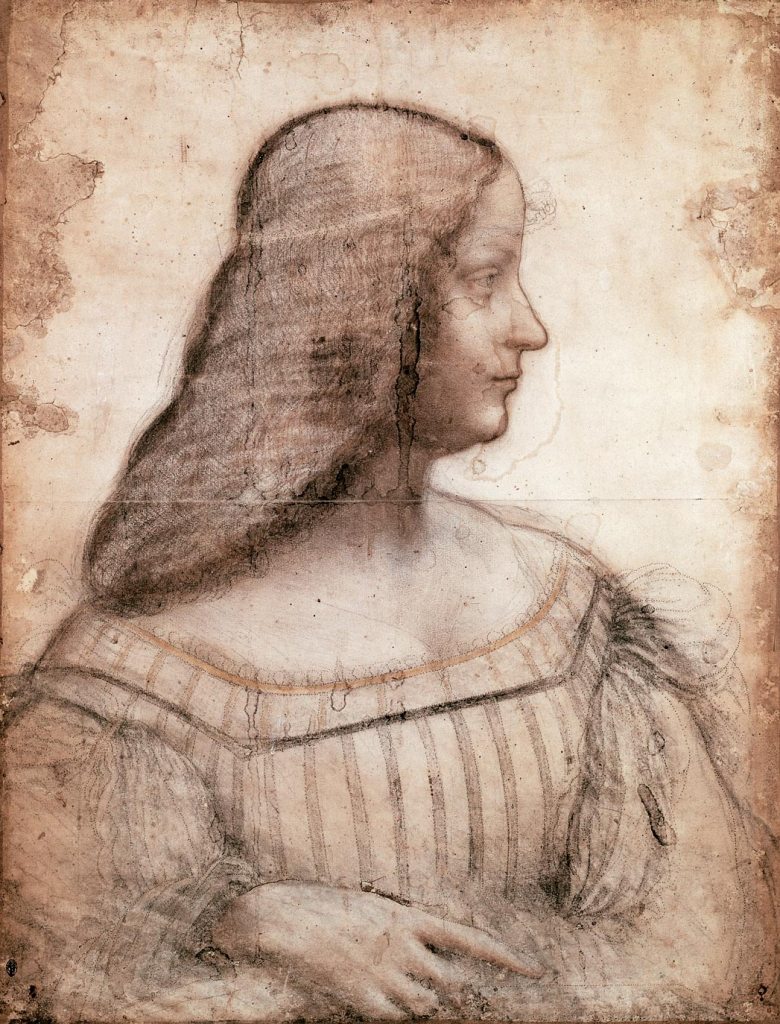
Leonardo da Vinci’s Art: Innovation, Observation, and Lasting Influence
Leonardo da Vinci (1452–1519) is celebrated as one of the great artists of the Italian Renaissance. His paintings and drawings are admired not only for their beauty, but also for the careful observation, scientific curiosity, and technical experimentation behind them. Though relatively few of his paintings survive, works such as the Mona Lisa and The Last Supper have shaped the history of art and remain recognizable around the world.
A Renaissance Approach to Art
Leonardo worked during a period when artists, scholars, and inventors were exploring new ways to understand the world. He approached art as both a creative practice and a form of investigation. He studied human anatomy, plants, water, light, and the movement of bodies, believing that close observation could help an artist represent nature more convincingly.
His notebooks reveal this wide-ranging curiosity. They contain sketches, diagrams, observations, and ideas about subjects from architecture to flight. For Leonardo, drawing was a way to think: a tool for examining how things worked and for exploring how they might be represented.
Techniques That Made His Work Distinctive
One of Leonardo’s best-known techniques is sfumato, an Italian term associated with soft, smoky transitions. Rather than outlining every form sharply, he blended tones and colors to create gradual shifts between light and shadow. This gave faces and figures a lifelike softness and made their expressions feel subtle and complex.
Leonardo also used light and shadow to give figures a sense of volume. This approach, often called chiaroscuro, helped make painted forms appear solid and three-dimensional. He carefully arranged figures, gestures, and lines of sight to guide the viewer through a scene. His compositions often feel balanced and natural, even when they are built around precise geometric structures.
Famous Works
Mona Lisa
Painted in the early 16th century, the Mona Lisa is famous for its enigmatic expression, softly blended paint, and atmospheric landscape. Leonardo’s use of sfumato makes the sitter’s features seem to change subtly as viewers look at them. The painting’s quiet mood and carefully balanced composition have inspired centuries of discussion.
The Last Supper
Leonardo created The Last Supper as a mural for the refectory of the convent of Santa Maria delle Grazie in Milan. The scene shows the moment when Jesus tells his disciples that one of them will betray him. Leonardo gives each disciple a distinct reaction, while the room’s perspective draws attention toward Jesus at the center.
The work is also known for its fragile condition. Leonardo experimented with a painting method that was not suited to the wall, and the image began deteriorating relatively soon after it was completed. It has undergone several restoration efforts, and its present condition reflects both the original work and its long history of preservation.
Virgin of the Rocks
Leonardo painted two versions of Virgin of the Rocks, both showing the Virgin Mary, the infant Jesus, John the Baptist, and an angel in a rocky landscape. The figures form a carefully arranged group, while the unusual setting creates a sense of mystery. The contrast between the tender gestures of the figures and the rugged natural surroundings is characteristic of Leonardo’s interest in both human feeling and the natural world.
Drawing and the Study of the Human Body
Leonardo’s drawings are central to his artistic legacy. He made detailed studies of faces, hands, drapery, plants, machines, and the human body. His anatomical drawings reflect his efforts to understand how muscles and bones shape movement and appearance. These studies helped inform his paintings, where figures often seem poised to move or respond emotionally.
One of his most famous drawings, the Vitruvian Man, places a male figure within a circle and a square. Inspired by the writings of the ancient Roman architect Vitruvius, the drawing explores ideas about proportion and the relationship between the human body and geometry. It captures Leonardo’s belief that artistic study could connect observation, mathematics, and the structure of nature.
Why Leonardo’s Art Still Matters
Leonardo’s influence comes from more than a handful of celebrated paintings. He expanded the possibilities of art through his study of light, perspective, anatomy, and human expression. His works invite close looking: a change in a smile, a gesture between figures, or a shift in the landscape can alter the way a scene feels.
His career also challenges the modern separation between art and science. Leonardo saw careful observation as essential to both. That spirit of inquiry, combined with his inventive use of composition and technique, continues to make his art compelling. Centuries after his death, Leonardo da Vinci remains a powerful example of how curiosity and creativity can transform the way people see the world.
Exploring the Art of Leonardo da Vinci: Answers to 7 Frequently Asked Questions
- Why is Leonardo da Vinci’s art famous?
- What is Leonardo da Vinci’s most famous art?
- What is Leonardo da Vinci’s most famous piece?
- What is painting 🎨 🖌?
- What did Leonardo da Vinci do art?
- What type of art is da Vinci known for?
- What art did Leonardo da Vinci do?
Why is Leonardo da Vinci’s art famous?
Leonardo da Vinci’s art is famous for its lifelike detail, subtle use of light and shadow, and expressive figures. He combined artistic skill with close observation of nature, anatomy, and human emotion, creating works that feel both realistic and mysterious. Paintings such as the Mona Lisa and The Last Supper are celebrated for their innovative techniques, carefully designed compositions, and lasting influence on art.
What is Leonardo da Vinci’s most famous art?
Leonardo da Vinci’s most famous artwork is the Mona Lisa, a portrait celebrated for its subject’s enigmatic smile, subtle use of light and shadow, and softly blended technique known as sfumato. Painted in the early 16th century, it is now displayed at the Louvre Museum in Paris and is among the most recognized paintings in the world. The Last Supper is another of Leonardo’s best-known works, but the Mona Lisa is generally considered his most famous.
What is Leonardo da Vinci’s most famous piece?
Leonardo da Vinci’s most famous work is generally considered to be the Mona Lisa, a portrait renowned for its subject’s subtle expression, Leonardo’s softly blended sfumato technique, and the atmospheric landscape in the background. Painted in the early 16th century, it is displayed at the Louvre Museum in Paris and has become one of the most recognizable paintings in the world.
What is painting 🎨 🖌?
Painting 🎨🖌 is the art of applying color to a surface to create images, express ideas, or evoke feelings. Leonardo da Vinci used paint, careful observation, and techniques such as sfumato—a subtle blending of tones—to make figures and landscapes appear lifelike and atmospheric. His works show how painting can combine creativity, skill, and close study of the world.
What did Leonardo da Vinci do art?
Leonardo da Vinci created paintings and drawings celebrated for their realism, expressive figures, and careful use of light and shadow. His best-known works include the Mona Lisa, The Last Supper, and Virgin of the Rocks. He also made sketches and studies of human anatomy, nature, and inventions, using close observation to explore how the world worked and how to represent it in art.
What type of art is da Vinci known for?
Leonardo da Vinci is best known for Renaissance painting, especially portraits and religious scenes. His celebrated works include the Mona Lisa and The Last Supper. He is also renowned for his drawings, which explore subjects such as human anatomy, nature, and engineering. His art is recognized for lifelike figures, careful use of light and shadow, balanced compositions, and subtle transitions of color known as sfumato.
What art did Leonardo da Vinci do?
Leonardo da Vinci was best known as a painter, creating portraits and religious scenes such as the Mona Lisa, The Last Supper, and Virgin of the Rocks. He was also an accomplished draftsman whose drawings include studies of anatomy, plants, machines, and human proportions. Although painting was his primary artistic medium, he explored sculpture, architecture, and engineering, too; relatively few of his paintings survive today.