
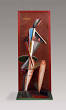
The Revolutionary Style of Cubism Art
Cubism is a groundbreaking art movement that emerged in the early 20th century, challenging traditional notions of perspective, form, and representation. Developed by Pablo Picasso and Georges Braque in the early 1900s, Cubism revolutionized the way artists approached depicting the world around them.
Characterized by fragmented forms, geometric shapes, and multiple viewpoints within a single composition, Cubist artworks often appear abstract and distorted. Artists sought to represent objects from different angles simultaneously, breaking them down into basic geometric shapes like cubes, spheres, and cones.
One of the key features of Cubism is its rejection of traditional techniques such as linear perspective and realistic representation. Instead, artists embraced a more conceptual approach to art-making, emphasizing the flatness of the canvas and exploring new ways of depicting space and form.
During its peak in the early 20th century, Cubism influenced not only painting but also sculpture, architecture, literature, and music. Artists like Juan Gris, Fernand Léger, and Robert Delaunay further developed the style, each adding their unique interpretations and contributions to the movement.
By deconstructing objects into their fundamental shapes and reassembling them in innovative ways, Cubist artists challenged viewers to see beyond traditional visual cues and engage with art on a deeper level. The movement paved the way for future artistic developments such as abstract art and surrealism.
Today, Cubism remains a significant chapter in art history that continues to inspire contemporary artists to push boundaries and explore new ways of seeing and interpreting the world around us.
Mastering Cubism: 6 Essential Tips for Exploring This Revolutionary Art Style
- Study the works of famous Cubist artists such as Pablo Picasso and Georges Braque.
- Understand the key characteristics of Cubism, including geometric shapes, multiple viewpoints, and fragmented forms.
- Experiment with incorporating elements of Cubism into your own artwork, such as using bold colors and abstract shapes.
- Explore how Cubism influenced other art movements, such as Futurism and Constructivism.
- Visit museums or galleries that feature Cubist artworks to gain a deeper appreciation for the style.
- Join art classes or workshops focused on Cubism to learn new techniques and perspectives.
Study the works of famous Cubist artists such as Pablo Picasso and Georges Braque.
To truly understand and appreciate the essence of Cubism art, aspiring artists and art enthusiasts are encouraged to study the works of renowned Cubist masters like Pablo Picasso and Georges Braque. By examining the innovative techniques, distinctive styles, and revolutionary approaches employed by these influential artists, one can gain valuable insights into the principles of Cubism and how it transformed the landscape of modern art. Picasso’s dynamic compositions and Braque’s exploration of geometric forms serve as prime examples of the movement’s emphasis on breaking down conventional boundaries and reshaping artistic conventions. Delving into their artworks offers a profound glimpse into the creative vision and groundbreaking spirit that defined Cubism as a revolutionary artistic movement.
Understand the key characteristics of Cubism, including geometric shapes, multiple viewpoints, and fragmented forms.
To appreciate and engage with Cubism art effectively, it is crucial to grasp its fundamental characteristics. These include the use of geometric shapes, the incorporation of multiple viewpoints within a single composition, and the depiction of fragmented forms. By understanding these key elements of Cubism, viewers can better comprehend the innovative and revolutionary approach that artists like Pablo Picasso and Georges Braque took in reshaping traditional artistic conventions.
Experiment with incorporating elements of Cubism into your own artwork, such as using bold colors and abstract shapes.
To enhance your artistic style, consider experimenting with elements of Cubism in your own artwork. Embrace the use of bold colors and abstract shapes inspired by the Cubist movement to create dynamic and visually engaging compositions. By incorporating Cubist techniques into your work, you can explore new ways of representing form and perspective while adding a modern and innovative twist to your artistic expression. Let the spirit of Cubism inspire you to break free from traditional constraints and unleash your creativity through vibrant colors and unconventional shapes in your art.
Explore how Cubism influenced other art movements, such as Futurism and Constructivism.
Explore how Cubism influenced other art movements, such as Futurism and Constructivism. Cubism’s innovative approach to depicting form and space had a profound impact on the development of art in the early 20th century. Futurism, with its emphasis on movement, speed, and technology, drew inspiration from Cubism’s fragmented forms and dynamic compositions. Constructivism, on the other hand, embraced Cubism’s geometric abstraction and emphasis on structure and construction in its exploration of art’s relationship to society and industry. By examining how Cubism influenced these movements, one can gain a deeper understanding of the interconnected nature of artistic innovation and evolution during this transformative period in art history.
Visit museums or galleries that feature Cubist artworks to gain a deeper appreciation for the style.
To gain a deeper appreciation for the revolutionary style of Cubism art, consider visiting museums or galleries that feature Cubist artworks. Immersing yourself in the vibrant and innovative creations of artists like Pablo Picasso, Georges Braque, and other pioneers of the movement can provide valuable insights into the techniques, themes, and impact of Cubism. By witnessing these masterpieces up close, you can better understand the complexities of fragmented forms, geometric shapes, and multiple viewpoints that define Cubist art. Exploring these artworks in person allows for a more profound connection with the artistic vision and revolutionary spirit that continue to resonate through the centuries.
Join art classes or workshops focused on Cubism to learn new techniques and perspectives.
Joining art classes or workshops focused on Cubism is a fantastic way to delve into this revolutionary art movement and expand your artistic skills. By immersing yourself in the study of Cubism, you can learn new techniques for deconstructing and reconstructing forms, as well as gain fresh perspectives on composition and representation. Engaging with experienced instructors and fellow art enthusiasts in a creative learning environment can inspire you to experiment with different approaches to art-making and enhance your understanding of how Cubism continues to influence contemporary artistic practices.